

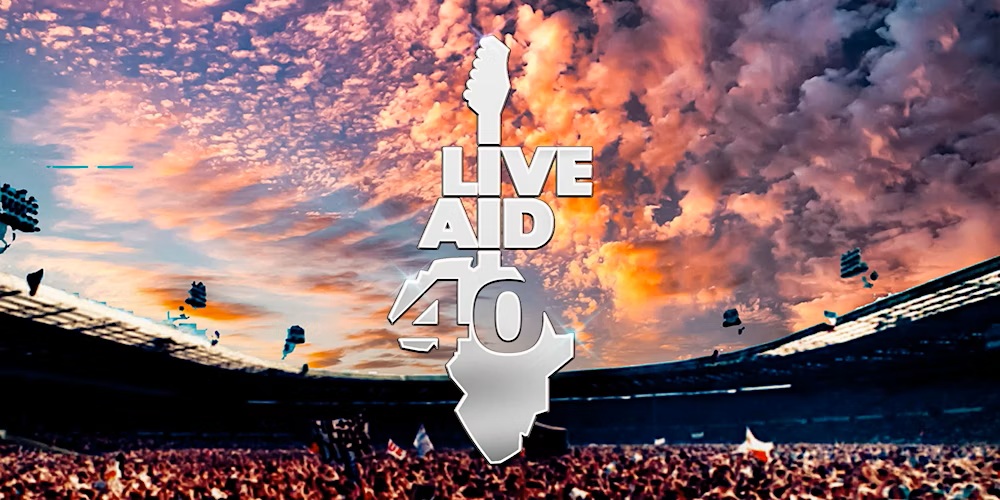
Exactly 40 years and one day ago, on July 13, 1985, the world came to a standstill to witness the greatest musical event in history. On that summer Saturday, the entire planet united in a unique experience: two stages, two cities, one heartbeat. Live Aid was a benefit concert held simultaneously at Wembley Stadium in London and JFK Stadium in Philadelphia, attracting around 1.5 billion viewers and raising millions for famine relief in Ethiopia.
For a generation of 20-somethings, it defined what music could achieve. It wasn’t just entertainment — it was about changing the world.
The Why: A Response to Tragedy
It all began in late 1984 when Boomtown Rats frontman Bob Geldof saw a BBC report on the devastating Ethiopian famine. Alongside Ultravox’s Midge Ure, he launched Band Aid and the hit single Do They Know It’s Christmas?, which sparked a movement but wasn’t enough.
The Vision
What started as a charity song became a revolutionary idea: a transatlantic concert broadcast live to the world. On July 13, 1985, Live Aid united people globally in a 16-hour broadcast, aiming to aid starving populations in Ethiopia and Eritrea.
Bob Geldof & Midge Ure
Sir Bob Geldof, then 34, became the face of a generation who believed music could spark global change. Midge Ure, his technical partner, ensured the vision was viable and powerful.
The Impact
Live Aid raised an estimated £150 million, channelled through the Band Aid Trust to humanitarian efforts. It was also a TV milestone — in a world without internet or social media, millions watched the same live event.
Memorable Moments
- Tickets cost just £5 in Wembley.
- Phil Collins played both stages, flying via Concorde.
- Queen delivered what’s widely hailed as the greatest live performance ever.
- David Bowie followed Queen with grace.
- Led Zeppelin’s reunion was marred by technical issues.
- Paul McCartney’s mic failed during Let It Be.
- Royal attendance by Charles and Diana lent prestige.
Live Aid Lineups & Highlights
The Bands That Made History
Wembley Stadium, London
First Half:
- Status Quo (opening with “Rockin’ All Over The World”)
- The Boomtown Rats
- Adam Ant
- Ultravox
- Spandau Ballet
- Elvis Costello
- Nik Kershaw
- Sade
- Sting
- Phil Collins
- Howard Jones
- Bryan Ferry
- Paul Young
- Alison Moyet
Second Half:
- U2
- Dire Straits
- Queen
- David Bowie
- The Who
- Elton John
- Wham!
- Paul McCartney (“Let It Be”)
JFK Stadium, Philadelphia
First Half:
- Joan Baez
- The Hooters
- The Four Tops
- Billy Ocean
- Black Sabbath
- Run–D.M.C.
- Rick Springfield
- REO Speedwagon
- Crosby, Stills, Nash & Young
- Judas Priest
- Bryan Adams
Second Half:
Bob Dylan
The Beach Boys
George Thorogood
Simple Minds
The Pretenders
Santana
Ashford & Simpson
Madonna
Tom Petty and the Heartbreakers
Kenny Loggins
The Cars
Neil Young
The Power Station
Thompson Twins
Eric Clapton
Phil Collins (second performance)
Led Zeppelin
Crosby, Stills, Nash & Young (again)
Duran Duran
Patti LaBelle
Hall & Oates
Mick Jagger
Tina Turner
The Legacy
Live Aid wasn’t just a concert — it marked the moment pop music became a force for global change. It inspired future benefit events and showed an entire generation that they could make a difference.
The Price of Success
Geldof later admitted the event overshadowed his music career. Yet the legacy remains unmatched.
Reflections at 40
Live Aid stands as a cultural milestone. In a pre-digital world, it achieved the impossible — uniting humanity in compassion through music. For one glorious summer day, it changed the world.